Essay: Adventures Exploring the World and Unchartered Physics Territory
As told by Pablo Jarillo-Herrero
My Early Youth
I was born in 1976 in Valencia (Spain) into a middle-class family. I am the second of four brothers. My parents did not have the opportunity to go to college, as they both started working in their teenage years. However, they were both well-read persons who valued hard work and culture, and they tried to instill those values to my brothers and I. My parents have complementary personalities, and I like to think that I got the best from each of them: a healthy dose of rational-mathematical aptitude from my father and an equally important dose of emotional intelligence from my mother.
I was a very curious kid, always asking questions to my parents, which they tell me it could become a little bit annoying on long car rides. I don’t have too many memories from my early childhood, but I remember being a happy kid.
Summers were the best, since I spent them (until age 10) at a campground “Devesa Gardens” which had a small zoo and it was nearby the Albufera natural reserve, a lagoon filled with interesting birds, fish, frogs, and snakes. My early sense of adventure/exploration and love for nature largely developed there. Another fond memory I have from my childhood was the trip to the Sierra de Cazorla, a natural reserve in the Andalucia region of southern Spain. My father and I, only 7 yrs old then, went there just the two of us, camping next to some French scientists interested in beautiful Spanish moon moths.
When I was in middle school, I got for Christmas two scientific sets: “Fisinova” and “Quiminova”, with which I could do small experiments.
Pablo Jarillo-herrero
The picture below is from that trip, when I was looking through the binoculars to some mountain goats, which I then chased up a steep slope. My father had to call me honking from the car when I went too far away. Adventure and an early sense of independence are memories from those days. When I was in middle school, I got for Christmas two scientific sets: “Fisinova” and “Quiminova”, with which I could do small experiments. This contributed to my passion for science. Far from being a fully nerdy kid, towards the end of middle school, I started to hang out with some of the unruly kids, a bit of a strange thing for a very good student. This brought a few small headaches to my parents, but luckily that phase did not extend itself long into high school.
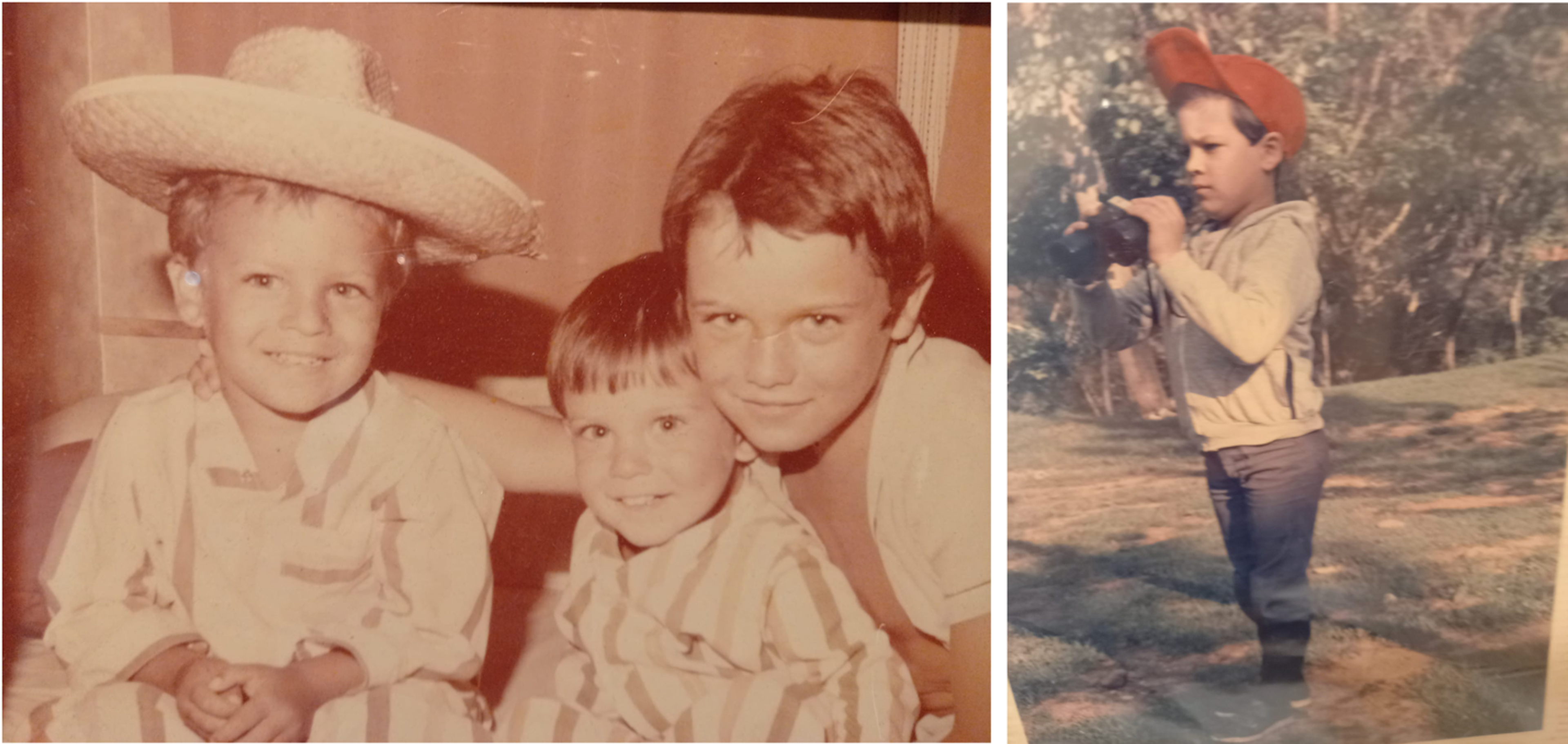
Right: Pablo looking at mountain goats with binoculars during his trip to the Sierra de Cazorla with his father when he was 7 years old.
High School – the Physics Journey begins
I went to the Jesuits High School in Valencia, a good school with good teachers that helped shape my developing mind. I generally enjoyed all subjects, including Latin, history, literature, philosophy, math and, of course, the sciences. I enjoyed so much biology that, for a while, I thought I was going to become an “Agronomy Engineer” (at the time the closest thing that an engineer (what I thought would land me a job) could get to biology (what I liked)).
But then in the last year of high school my physics and chemistry teacher, Mariano Celada, asked me if I wanted to participate in the Physics Olympiads. I did so, and did well enough at the local phase that then I got training for the national phase. So I ended up spending my only school-free afternoons, Tuesdays and Thursdays, at the Polytechnic University of Valencia, where I got advanced physics classes. There I met several college professors and other talented students interested in physics. I learned a lot and I realized I really liked physics. At the national phase I did ok, but I had never studied theory of errors, so I did not qualify for the international phase. Still, that experience motivated me to tell my parents I was going to enroll in physics at the University of Valencia, and my parents, who had no idea what type of job that would lead to… thankfully trusted my judgement and supported me in that “crazy” choice!
I went to London to learn English. Due to funny strange reasons, I ended up working as a dish washer (yes, by hand) at a restaurant in Victoria Station. This was a critical experience in my life.
Pablo Jarillo-Herrero
College Physics – International Adventures begin
I remember fondly my college years. I lived at home with my parents, as it was customary in Spain at the time if you went to a local university. But I had a lot of freedom to hang out with friends, travel, and work a bit on the sides teaching math and science to high schoolers. In college I naturally gravitated towards a group of friends which included some of the strongest students in my cohort. I learned a lot from them, both physics-wise, but also about life. I cherish the long discussions about science, politics, and life during lunch at the college cafeteria.
In the summer of my sophomore year, I went to London to learn English. Due to funny strange reasons, I ended up working as a dish washer (yes, by hand) at a restaurant in Victoria Station. After a few weeks I got promoted to apprentice cook. Nothing like working 10hrs a day in a hot kitchen (plus 3 extra hours of English lessons in the evenings and an extra couple hrs going out at night) to build one’s character! This was a critical experience in my life.
Learn physics, not English
The following summer I wanted to further improve my English by going to the US. I asked one of my professors if he knew someone who could host me. He said “Not to learn English. But if you want to learn physics, I can talk to some of my colleagues in Germany”.
So I ended up spending two months at the MAMI particle physics accelerator in Mainz. There I got a first taste of actual physics research, sitting next to international PhD students and postdocs, discussing with professors. I had a great time and my physics horizons broadened very substantially. The following year I applied to the summer research program at GSI, a nuclear physics lab also in Germany. I was accepted and spent 2.5 months there, where again my horizons further expanded. There I also met a very nice and beautiful young woman, a physics student also from Valencia… who eventually became my wife! During my undergrad in physics, I trained to become a theoretical particle physicist. This was largely due to two reasons: the first is that, at the time, the particle theory group at the Univ. of Valencia was the strongest group, with some international visitors, faculty, and postdocs. The second was that almost all the “top” students (meaning with highest grades) gravitated towards theoretical particle physics (we all “wanted to be Einstein or Feynman…”), and many of my friends were also in that group.
I’m very thankful that my teachers were thinking of what was best for me, and not what was best for their colleagues
Pablo Jarillo-Herrero
During the last year of my undergrad (5 years at the time in Spain), some of my professors encouraged me to go abroad to do a PhD, since I would be able to do better research than in Valencia (almost all students back then stayed at their home university for their PhD, especially the top ones who could get special fellowships). This brought those professors some criticism from other professors, who blamed them for sending away “our best students”. I’m very thankful that my teachers were thinking of what was best for me, and not what was best for their colleagues. I applied to graduate school in the US, and I ended up going to the University of California at San Diego, which had a very strong particle physics phenomenology group.
First Adventure in the US – Condensed Matter Physics
At UCSD my world view (physics and non-physics) expanded once more and became much more global. In particular, over there I realized that not only particle physics theory, but plenty other fields of physics were very interesting. I was enjoying a lot studying quantum field theory and other advanced courses, but the seminars I was finding most interesting were the condensed matter seminars. This created a difficult choice for me, and a risky one… should I switch fields? I agonized a lot over this.
After the first year, the whole class cohort had to take the qualifying exams, and the high energy theorists pretty much only accepted in their group the top 1-2 scorers. I thought maybe that would decide for me but, for better or worse, I actually got the top score… so “I was forced” to decide myself! Over the following year I gradually became more and more interested in condensed matter physics and, in particular, nanoscience. Several people played a substantial role in this, including my good friend Joaquin Fernandez-Rossier (a postdoc back then).
A pivotal moment was attending the March meeting of the American Physical Society (APS) in Seattle, where I attended plenty of talks and I interviewed with Leo Kouwenhoven, from Delft, whose work I had followed.
A fun fact from that APS meeting is that there I met for the first time my Kavli co-recipient Allan MacDonald, with whom Joaquin would go on to do a postdoc at UT Austin a year later! In the end I decided to switch to condensed matter and switch all the way to become an experimentalist. I particularly liked the nanoscience research being done by Leo’s group at Delft University of Technology in the Netherlands.
In addition, the two years apart from my girlfriend also meant that it was important to make a decision to try to reunite. So 50% because of scientific reasons and 50% because of personal reasons, I ended up moving to Delft, where my girlfriend, as Spanish citizen, could easily come to live with me.
Time in Delft – The Rise of my Physics Career
I really enjoyed my time at Delft, in the Quantum Transport (QT) group. We had great facilities and great people with a very high scientific standard. At the same time, it was a huge adjustment for me: new country and culture and, importantly, the change from “theorist” to “experimentalist”. I did my PhD on quantum transport in carbon nanotube (CNT) quantum dots (QDs), and for the first two years I was struggling a bit, with no results, and I often asked myself whether perhaps the switch I had made was not such a great idea after all.By the middle of my PhD, CNTs were no longer as popular as a few years earlier, and it was hard to come up with new interesting ideas.
The years 2003-2004 were quite pivotal: I gave my first invited talk at NT’03 in Seoul, where I met MIT professor Mildred Dresselhaus, a giant of the field that would later become a friend and mentor when I joined MIT.
Pablo Jarillo-Herrero
Fortunately, I persevered and I also got support from two great mentors: Jing Kong (a postdoc with Cees Dekker who later became faculty at MIT, and she is now my colleague, her office up just one floor from mine!) and Silvano De Franceschi (a postdoc in Leo’s group who taught me a lot about experimental physics).
The years 2003-2004 were quite pivotal: I started to get interesting results, I also gave my first invited talk at an international conference, NT’03 in Seoul, where I met MIT professor Mildred Dresselhaus, a giant of the field that would later become a friend and mentor when I joined MIT. She was also the first MIT winner of the Kavli Prize in Nanoscience! From then on, my PhD changed course, things started to go very well, and I ended up with a pretty good PhD, which opened many doors for me. One thing I value a lot from my time in QT is that I got a lot of freedom and independence to explore research directions. This was partly because my advisor was more interested in other projects than mine (at least until interesting results started to pop up!). And I was also taught to appreciate/develop “good taste” for problems.
I try to run my group following some lessons: give freedom and independence to young students and postdocs
Pablo Jarillo-Herrero
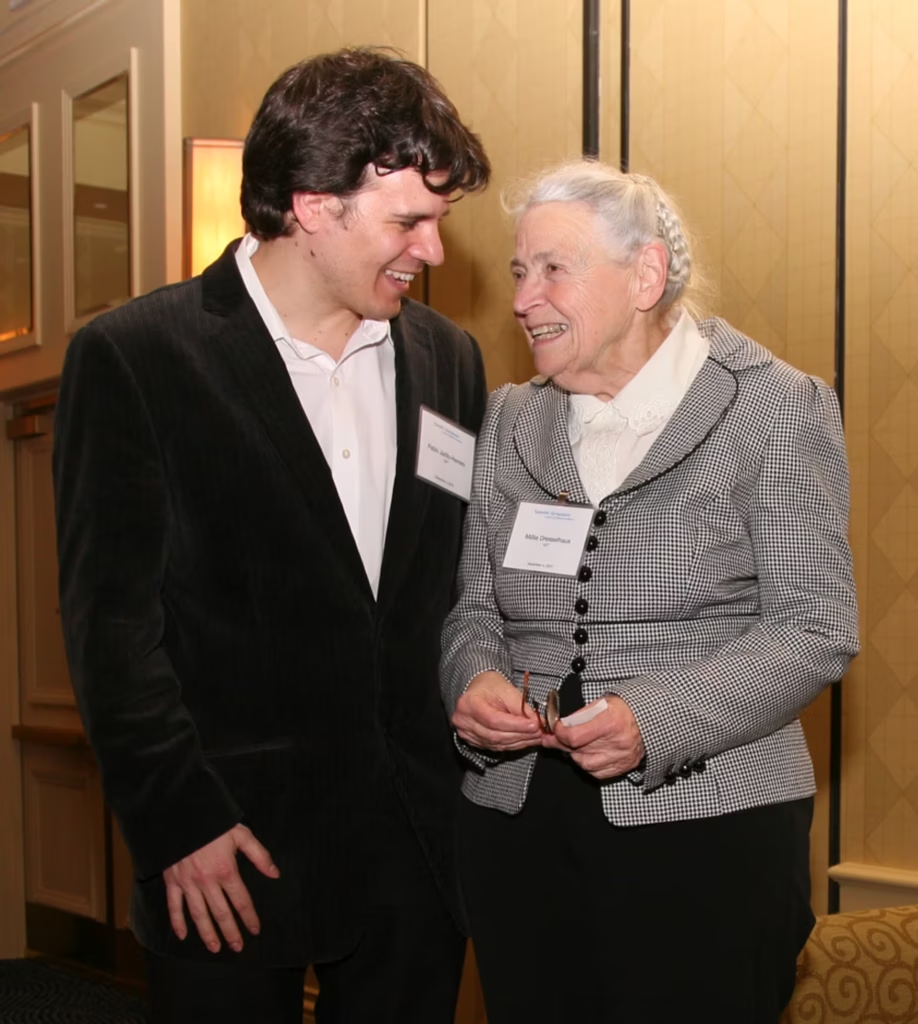
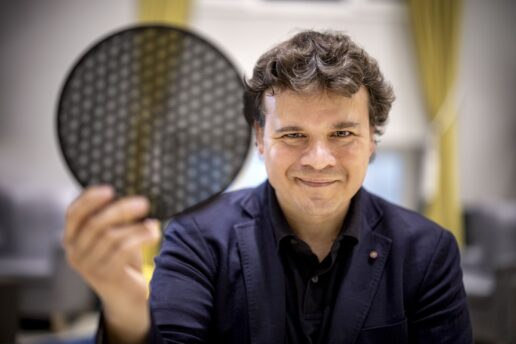
Photo: Justin Knight
To this day I try to run my group at MIT following some of those lessons: give freedom and independence to young students/postdocs and try to instill in them a good sense of direction/research taste. By the way, Delft was also my first connection to the Kavli Foundation since, during my time at Delft, Delft became host to the Kavli Institute of Nanoscience in Delft! After my PhD (2005), I decided to stay one more year as a postdoc at Delft to wait for my wife to finish her PhD. Initially I was planning to do a postdoc in solid state quantum optics, but then I learned about the recent discovery of graphene and the seminal papers by the Geim and Kim groups on the interesting quantum Hall effect in graphene. I was familiar with graphene because CNTs are “just graphene rolled into seamless cylinders”, but the 2D format offered very exciting properties and tunability. I visited Manchester, where Andre Geim and Kostya Novoselov were very kind to host me and a couple other students/postdocs from Delft to learn about graphene exfoliation and isolation. I’ve always felt very appreciative of their openness and generosity. Then I fell in love with graphene and I decided to work on it for my postdoc, first in Delft, where we got soon quite interesting results on graphene Josephson junctions, and then at Columbia University, where I joined Philip Kim’s group.
Back to the US – Columbia and MIT’s job offer
My relatively short postdoc at Columbia (15 months) was also extremely formative. At Delft the majority of the emphasis (at least in QT) was on quantum information… specifically qubits.
At Columbia there were many people working in all areas of condensed matter physics, and the seminars were very broad. They opened my eyes to the beauty and full breadth of condensed matter physics. The facilities at Columbia were also much simpler than at Delft, and there I learned that one can do great physics with much more modest means than we had at Delft. Columbia was one of the two world centers for graphene (the other being Manchester) and I learned a lot there, both from my wonderful mentor Philip, as well as the other research groups. I worked with close friends, such as Barbaros Özyilmaz, and met Nobel prize winner Horst Störmer, who had good advice during my faculty job applications. New York City itself was of course a lot of fun.
The “urban legend” is that MIT thought that Harvard was interested and apparently this is the best thing to “stimulate” MIT to proactively recruit you!
Pablo Jarillo-Herrero
A month after I landed in New York I was invited to give a seminar at Harvard and, shortly after that (and to my surprise), MIT asked me if I wanted to apply for a junior faculty position there (the “urban legend” is that MIT thought that Harvard was interested in me… and apparently this is the best thing to “stimulate” MIT to proactively recruit you!).
My wife and I had already discussed returning to Spain, where I had a half-baked research position in Barcelona. Still, I thought that giving a seminar at MIT would look good in my CV, so I applied. To my very big surprise they decided to offer me a position. This was on one hand too good an opportunity to pass… yet I had promised my wife we would return to Spain. Well… I somehow managed to convince her that, since less than 50% of the faculty at the time got tenured in MIT Physics, my acceptance would only mean a ~7 years delay in our return to Spain. Well… that was 18 yrs ago… and she still reminds me about it very often!
Professor at MIT – Graphene and Twistronics
At MIT, and now as a faculty member, my exposure to the world’s top talent took a step up. Everyone around me seemed so good! The undergrad students, the grad students and postdocs, the faculty… it was hard not to develop a bit of impostor syndrome! I also had a hard time adjusting to the multi-tasking life of a professor, with teaching, hiring and training people, setting up a lab, writing grants, doing service, etc. The first few years were super-intensive. Though “in principle” I did not care about getting tenure since we wanted to return to Spain… well, in practice, I did care a lot about doing very well.
MIT is a place where one can aspire to do top research and the means and people are there to help you do so, so I really wanted to succeed. I split my research efforts into graphene and topological insulators (TIs), an emerging field back in 2008 when I started at MIT. Though TIs research was quite interesting, the systems were not quite as “clean” as graphene, so a larger fraction of my research success was in graphene and other 2D materials. In 2010, research at Columbia had shown that hexagonal boron nitride (hBN), a novel 3D layered material, was a great substrate for high mobility graphene devices. The community then realized that it was now possible to create high quality 2D heterostructures using graphene and hBN. It is from those times that I started to think about exploring the rotational degree of freedom as an interesting tuning knob in condensed matter physics.
My motivations was the following: in condensed matter physics, systems are very complex and it is hard to predict things, especially when it comes to the behavior of strongly interacting particles. Therefore, if one comes across unexplored territory, it is worth trying to explore it, because surprises are bound to happen.
Material science history
Since in the history of materials science, and up until 2010, it had been impossible to choose the angle between crystalline planes in solids, it made a lot of sense to explore that possibility, now that the advent of 2D materials and the hBN ultra-flat substrates had made this possible. So, we started to work on this. In 2011-2012 we published two papers with Brian LeRoy on scanning tunneling microscopy (STM) of graphene on hBN, where we imaged the graphene/hBN moiré pattern that forms when you stack them, how it changes with twist angle, and how the electronic structure of graphene gets modified. In 2012 we also published our own work where we explored the “large twist angle regime” of twisted bilayer graphene, and the decoupling of the electronic structures of the two graphene sheets because of the large separation of the Dirac cones in momentum space.
Then we started to work on quantum transport experiments on smaller twist angle samples, both for graphene/hBN (with the realization in 2013 of the Hofstadter butterfly) and twisted bilayer graphene (with a 2016 paper where 1.8° twisted bilayer graphene showed an interesting decrease in the electron Fermi velocity).
At that point, we had become aware of earlier separate works by Eva Andrei and Allan MacDonald, about the interesting single particle physics of magic-angle twisted bilayer graphene
Pablo Jarillo-Herrero
Leaning in on earlier work
The latter work was led by my young graduate student Yuan Cao, a phenomenal PhD student. At that point, we had become aware of earlier separate works by my Kavli co-recipients, Eva Andrei and Allan MacDonald, about the interesting single particle physics of magic-angle twisted bilayer graphene. Eva had published a very nice paper back in 2010 in which her group had done STM on a CVD-grown bilayer graphene sample. This sample was “turbostratic” meaning that it had regions with different twist angles. Their STM spectroscopy had shown two peaks in the energy spectrum, which they associated with Van Hove singularities, and the energy of these peaks depended on the twist angle.
In particular, the peaks positions extrapolated to zero at a twist angle close to 1.1°. In 2011, Allan and his postdoc Rafi Bistritzer, had applied the “continuum model” of the twisted bilayer graphene to the case of very small twist angles, and they coined the term “magic-angle” at which a flat band in the electronic structure would develop. They predicted this would occur at 1.1°, which was consistent with Eva’s measurements. Other theorists at around the time had also developed flat band models, but MacDonald’s was the easiest and cleaner model to follow, and the one which we were initially aware of.
Now, the existence of flat electronic bands at the magic-angle is a single particle physics effect. It was not clear at all what the consequences would be if one would make devices at that angle, so for many years the community did not work very intensively on this topic.
Magic Angle Graphene and Moiré Quantum Matter
As I mentioned above, Yuan (who had started his PhD in 2014) had been studying smallish angles and, once we got our 2016 results, we decided to make devices trying to “hit” the magic-angle of 1.1°. Yuan had developed a technique to fabricate twisted heterostructures with very precise twist angle, and we were able to make successful magic-angle twisted bilayer (MATBG) devices by 2017. Initially my intuition was to look for “correlated insulator” behavior in these devices. In fact, I wanted Yuan to make devices where we would be able to perform both transport and tunneling spectroscopy simultaneously. In tunneling I expected to see a peak in the density of states because of the flat bands, in particular at the energy of the Van Hove singularities, similarly to what Eva’s group had seen. But in transport I expected to measure an insulator when we tuned the chemical potential (controlled by an electrostatic gate voltage) into the Van Hove singularity.
My reasoning was that the high density of states at the Van Hove singularity would lead to an unstable situation and the system would develop a correlated many-body gap in the spectrum. Therefore, when Yuan initially showed me the insulating behavior, I was gladly surprised but not very surprised.
However, very soon we realized that the type of insulator we had discovered was not the one we had anticipated: our insulator behavior only appeared when we added an integer number of electrons/holes per moiré unit cell to the system, for which in general the chemical potential does not have to coincide with the energy of the Van Hove singularity. This meant that the correlated insulator we discovered was quite a bit more exotic, and closer (at least in “spirit”) to a Mott-like insulator, of the type you have in undoped high-temperature cuprate superconductors.
Because we were looking for insulators, we had made devices in a two-terminal geometry, where you have an additional series resistance from the contact leads to the device. Expecting an insulator (infinite resistance), some extra resistance in series is irrelevant. However, once we realized that we had a special correlated insulator, then we noticed something subtle: when we added a little bit of extra charge density (or doping) to the system, starting from the correlated insulator state, then the resistance of the device decreased upon decreasing the temperature. However it saturated at low temperature (due to the contact resistance), so it was not possible to see “how good a conductor” the system was going to be.
We published both papers on the discovery of correlated insulator states and superconductivity in the same issue of Nature in 2018
Pablo Jarillo-Herrero
Fantasizing about superconductivity
At that point, Yuan and I, and the rest of the team, fantasized about the possibility that the system may want to go superconducting. The issue came up then: Should we make four-terminal geometry devices (a geometry that bypasses the contact resistance and can measure the intrinsic resistance of the devices)? I told the team that… “of course we had to make them!”. There was only a chance in a million that MATBG was a superconductor, but we had to find out (even though it would take several weeks of very hard work to make new devices). Yuan fabricated the devices, and when we cooled them down we saw that the devices indeed were superconducting: MATBG was an electrically tunable superconductor, made out of pure carbon, and this only happened when the twist angle between the two graphene layers was very close to the magic angle of 1.1°.
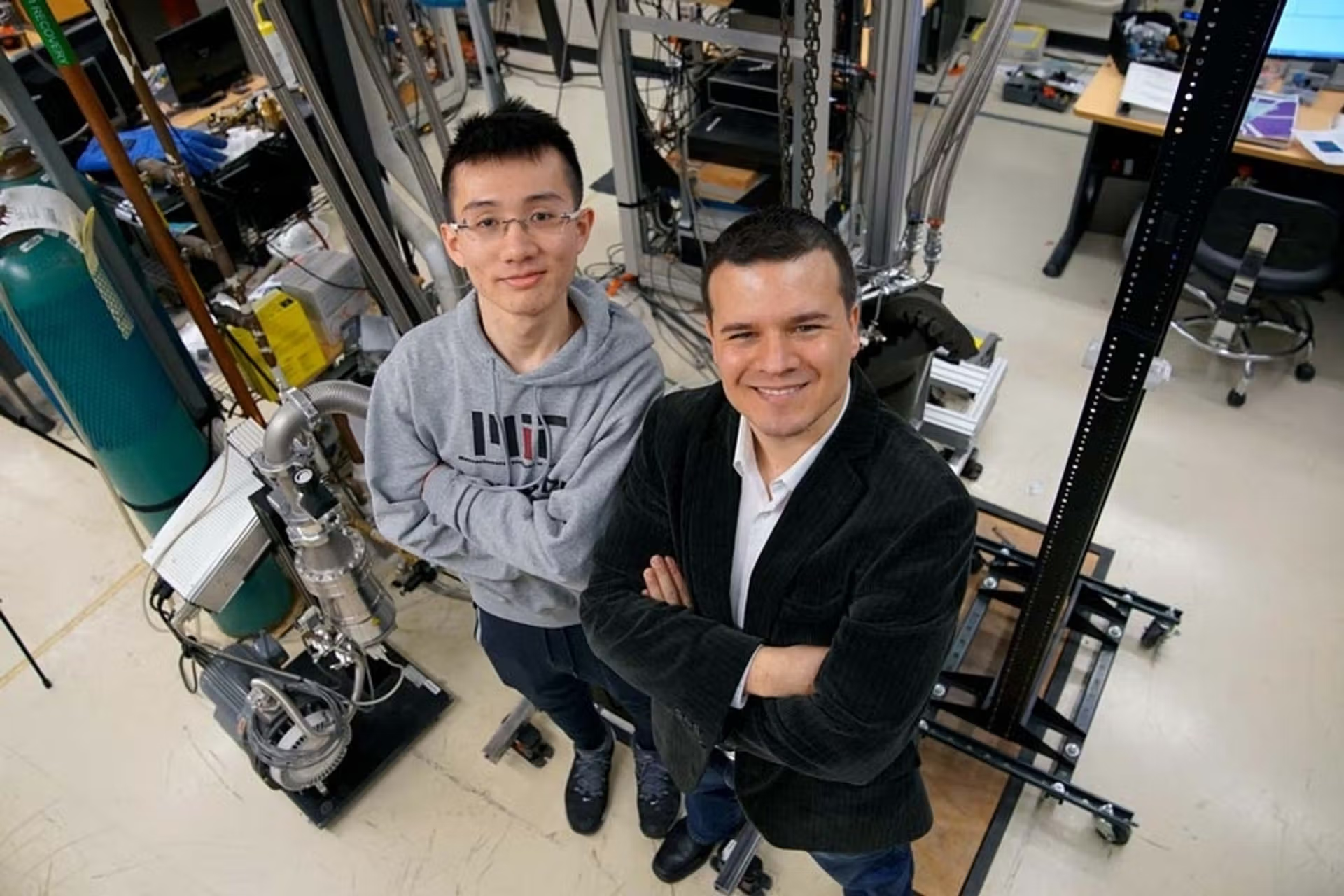
Photo: Melanie Gonick/MIT
We immediately realized that this was a very important result. We published both papers (the discovery of correlated insulator states and superconductivity) in the same issue of Nature in 2018. The community became very interested immediately and lots of groups, experimentalists and, especially, theorists started to work on the subject. Since the discovery, the community at large has made plenty other discoveries and by now the field of “twistronics” (for twist-electronics) has become a large subfield of condensed matter physics. Physicists often also call this field “moiré quantum matter”, which is more general because when one stacks different materials, then a twist angle is not needed to generate a moiré pattern. There are several aspects that make moiré quantum matter a great platform to investigate correlated and topological phenomena. One is that it’s a great platform to generate flat electronic bands, bands where the kinetic energy of the electrons is of the same order (or smaller) than the Coulomb interaction between electrons. And we know, from previous studies, that it is many-body interactions that are responsible for most of the fascinating states of quantum matter in the universe. In addition, the flat bands of moiré quantum systems are very often topological, which endows the wavefunctions with extra interesting mathematical properties not present in other systems of electrons.
More recently there have been other systems where one can generate flat topological bands, but somehow moiré devices were the first where many of the most interesting phenomena were discovered (e.g. the fractional quantum anomalous Hall effect, discovered by Xiaodong Xu and collaborators in twisted MoTe2 and later by my colleague Long Ju in a different moiré system) and continue to provide inspiration for theorists and experimentalists alike.
A popular analogy I like to mention is that these systems are kind of like “inverse philosopher’s stone”
Pablo Jarillo-Herrero
In fact, the magic of moiré systems is that, within a relatively short time of just 5 years or so, and using very simple elements (e.g. graphene) the community has been able to realize most of the quantum phases of solid matter, often in very exotic or unconventional ways, and in some cases realizing entirely new ones. These phases include unconventional superconductors, exotic correlated insulators, new types of magnets, novel ferroelectric systems, new topological phases of matter, generalized Wigner crystals, etc.
A popular analogy I like to mention is that these systems are kind of like “inverse philosopher’s stones”. Medieval alchemists were interested in finding a stone that, among other “magic properties”, would turn anything it’d touch into gold, the philosopher’s stone. Moiré quantum matter is a bit “the opposite” of that: a simple object (like graphene) can be made to behave like many other materials (e.g. superconductor, insulator, magnet, etc) just by stacking it onto itself and playing with its geometry (e.g. the angle). Of course, it is important to emphasize that the starting ingredient (e.g. graphene) is not by itself, in monolayer form, an insulator, a superconductor, or a magnet, etc.
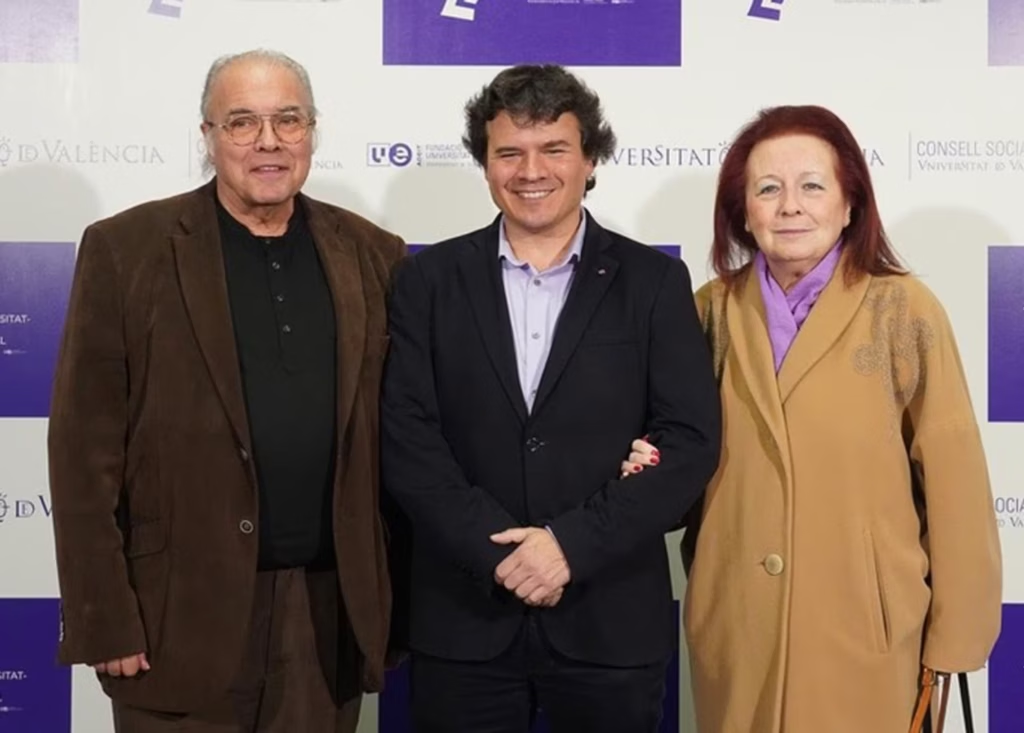
The discovery and subsequent developments have meant an important level of recognition for the work done by my group. I feel incredibly honored by the support of friends and colleagues that have considered our work worthy of such high recognition. The Kavli Prize in Nanoscience is a tremendous honor that I, honestly, never thought I would receive. Once more, I see this as a recognition to many years of work by the whole group, and especially my incredibly talented students and postdocs, whose hard work and effort made all of this possible. Our numerous collaborators, both at MIT and around the world have also played a very important role, and I see this prize also as recognition to them. I have already mentioned above, if only a small part and briefly, the great contributions that my Kavli co-recipients Eva Andrei and Allan MacDonald have made. I’m humbled and incredibly honored to be sharing this award with them.
I want to also emphasize that this award honors fundamental physics research in nanoscience. It is incredibly important for society to continue to support fundamental research: although it often doesn’t have a direct near-term application, in the long run it happens to be the most transformative and impactful in society. We have countless examples of applications (GPS, lasers, MRI, etc) which originated from curiosity driven research about the fundamental behavior of matter.
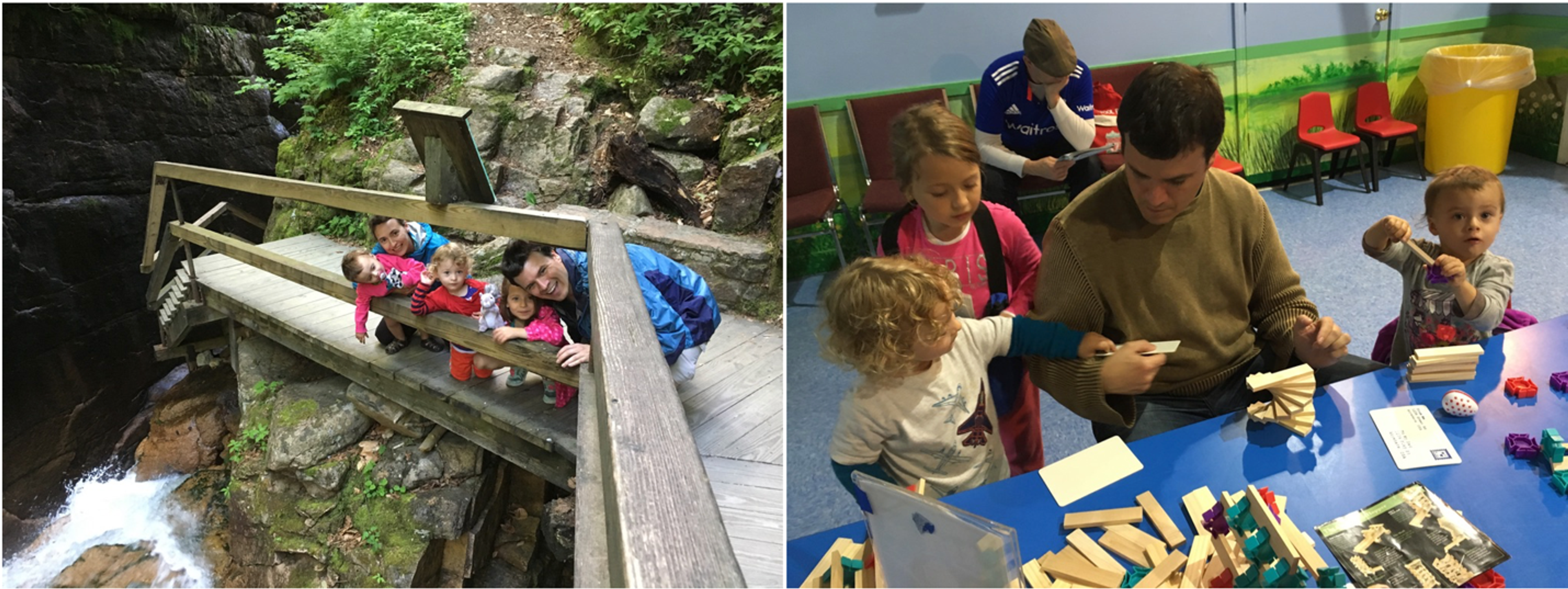
I cannot end this autobiography without mentioning my family, my wife Empar and my three kids Marta, Maria, and David. They have been an integral part of the whole journey, becoming my support, my bedrock, helping me keep the feet on the ground, helping me be a better person and scientist.