MIT community members elected to the National Academy of Inventors for 2025
Professors Ahmad Bahai and Kripa Varanasi, plus seven additional MIT alumni, are honored for highly impactful inventions.
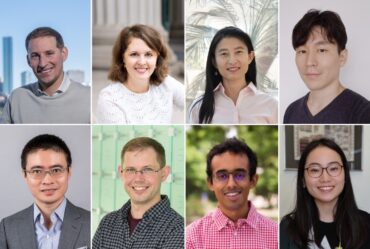
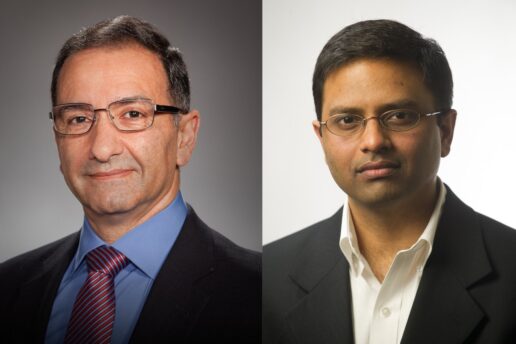
The National Academy of Inventors (NAI) has named nine MIT affiliates as members of the 2025 class of NAI Fellows. They include Ahmad Bahai, an MIT professor of the practice in the Department of Electrical Engineering and Computer Science (EECS), and Kripa K. Varanasi, MIT professor in the Department of Mechanical Engineering, as well as seven additional MIT alumni. NAI fellowship is the highest professional distinction awarded solely to inventors.
“NAI Fellows are a driving force within the innovation ecosystem, and their contributions across scientific disciplines are shaping the future of our world,” says Paul R. Sanberg, fellow and president of the National Academy of Inventors. “We are thrilled to welcome this year’s class of fellows to the academy.”
This year’s 169 U.S. fellows represent 127 universities, government agencies, and research institutions across 40 U.S. states. Together, the 2025 class hold more than 5,300 U.S. patents and include recipients of the Nobel Prize, the National Medal of Science and National Medal of Technology and Innovation, as well as members of the national academies of Sciences, Engineering, and Medicine, among others.
Ahmad Bahai is professor of the practice in EECS. He was an adjunct professor at Stanford University from 2017 to 2022 and a professor in residence at the University of California at Berkeley from 2001 to 2010. Bahai has held a number of leadership roles, including director of research labs and chief technology officer of National Semiconductor, technical manager of a research group at Bell Laboratories, and founder of Algorex, a communication and acoustic integrated circuit and system company, which was acquired by National Semiconductor.
Currently, Bahai is the chief technology officer and director of corporate research of Texas Instruments and director of Kilby Labs and corporate research, and is a member of the Industrial Advisory Committee of CHIPS Act. Bahai is an IEEE Fellow and an AIMBE Fellow; he has authored over 80 publications in IEEE/IEE journals and holds more than 40 patents related to systems and circuits.
He holds an MS in electrical engineering from Imperial College London and a doctorate degree in electrical engineering from UC Berkeley.
Kripa K. Varanasi SM ’02, PhD ’04, professor of mechanical engineering, is widely recognized for his significant contributions in the field of interfacial science, thermal fluids, electrochemical systems, advanced materials, and manufacturing. A member of the MIT faculty since 2009, he leads the interdisciplinary Varanasi Research Group, which focuses on understanding physico-chemical and biological phenomena at the interfaces of matter. His group develops innovative surfaces, materials, devices, processes, and associated technologies that improve efficiency and performance across industries, including energy, decarbonization, life sciences, water, agriculture, transportation, and consumer products.
Varanasi has also scaled basic research into practical, market-ready technologies. He has co-founded six companies, including AgZen, Alsym Energy, CoFlo Medical, Dropwise, Infinite Cooling, and LiquiGlide, and his companies have been widely recognized for driving innovation across a range of industries. Throughout his career, Varanasi has been recognized for excellence in research and mentorship. Honors include the National Science Foundation CAREER Award, DARPA Young Faculty Award, SME Outstanding Young Manufacturing Engineer Award, ASME’s Bergles-Rohsenow Heat Transfer Award and Gustus L. Larson Memorial Award, Boston Business Journal’s 40 Under 40, and MIT’s Frank E. Perkins Award for Excellence in Graduate Advising.
Varanasi earned his undergraduate degree in mechanical engineering from the Indian Institute of Technology Madras, and his master’s degree and PhD from MIT. Prior to joining the faculty, he served as lead researcher and project leader at the GE Global Research Center, where he received multiple internal awards for innovation, leadership, and technical excellence. He was recently named faculty director of the Deshpande Center for Technological Innovation.
The seven additional MIT alumni who were elected to the NAI for 2025 include:
- Robert William Brown PhD ’68 (Physics);
- André DeHon ’90, SM ’93, PhD ’96 (Electrical Engineering and Computer Science);
- Shanhui Fan PhD ’97 (Physics);
- Jun O. Liu PhD ’90 (Chemistry)
- Marios-Christos Papaefthymiou SM ’90, PhD ’93 (Electrical Engineering and Computer Science);
- Darryll J. Pines SM ’88, PhD ’92 (Mechanical Engineering); and
- Yasha Yi PhD ’04 (Physics).
The NAI Fellows program was founded in 2012 and has grown to include 2,253 distinguished researchers and innovators, who hold over 86,000 U.S. patents and 20,000 licensed technologies. Collectively, NAI Fellows’ innovations have generated an estimated $3.8 trillion in revenue and 1.4 million jobs.
The 2025 class will be honored and presented with their medals by a senior official of the United States Patent and Trademark Office at the NAI 15th Annual Conference on June 4, 2026, in Los Angeles.