Pablo Jarillo-Herrero wins Kavli Prize in Nanoscience
The MIT physicist shares the honor with two others for foundational research establishing the field of twistronics.
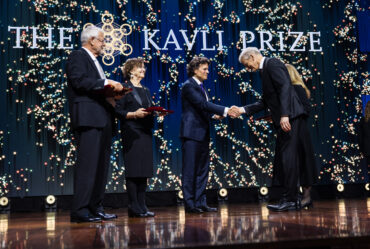
MIT professor of physics Pablo Jarillo-Herrero is among 10 researchers worldwide to receive this year’s prestigious Kavli Prize.
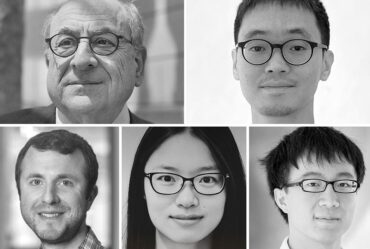
Jarillo-Herrero is co-recipient of the 2026 Kavli Prize in Nanoscience “for foundational work that established the field of twistronics.” His co-recipients are professors Eva Y. Andrei at Rutgers University and Allan MacDonald from the University of Texas at Austin.
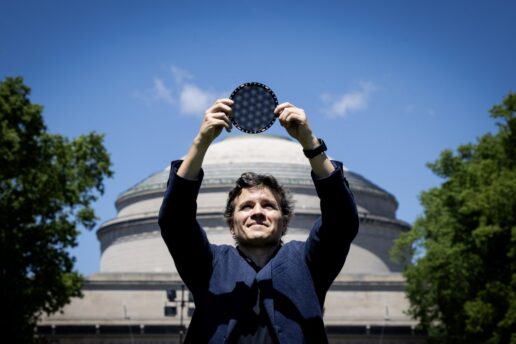
These three physicists are being honored for the theoretical foundation and experimental validation of a new field of “twistronics,” where superconductivity, magnetism, and other properties can be obtained by rotating two-dimensional materials such as graphene to a “magic angle.”
A partnership among the Norwegian Academy of Science and Letters, the Norwegian Ministry of Education and Research, and the Kavli Foundation, the Kavli Prizes are awarded every two years to “honor scientists for breakthroughs in astrophysics, nanoscience and neuroscience that transform our understanding of the big, the small and the complex.” The laureates in each field will share $1 million.
“Pablo’s groundbreaking research has once again been given well-deserved recognition,” says Nergis Mavalvala, dean of the MIT School of Science and the Curtis and Kathleen Marble Professor of Astrophysics. “Pablo and his co-recipients have pioneered twistronics, very fundamental scientific research that has opened up a new field with myriad possibilities for novel quantum materials.”
In 2009, using scanning tunneling microscopy and spectroscopy on graphene, most commonly found as a single layer of carbon atoms arranged in hexagons resembling a honeycomb structure, Andrei and her research group demonstrated that small variations in twist angle profoundly modified the electronic structure. This demonstration — that geometric control, rather than chemical composition, could modify a material’s electronic structure — represented a fundamental advance in materials design and arguably launched the field now known as “twistronics.”
In 2011, MacDonald quantitatively explained the emergence of this electronic structure by geometries at discrete magic angles. This framework has since become the theoretical foundation of what are known as moiré materials, and has guided subsequent experimental and theoretical developments across a wide range of twisted and layered systems.
In 2018, Jarillo-Herrero’s group observed correlated insulating phases and superconductivity in magic-angle twisted bilayer graphene devices. The resulting platform, “combining atomic-scale structural simplicity with electronic tunability, has enabled systematic investigations has had broad and lasting impact across nanoscience and quantum material research,” according to the Kavli Prize citation.
“It was a big surprise, because the technique we used, though conceptually straightforward, was hard to pull off in the lab,” said Jarillo-Herrero recently. He is also the Cecil and Ida Green Professor of Physics at MIT and a member of the Research Laboratory of Electronics.
“I’m humbled and incredibly honored to be sharing this award with [Andrei and MacDonald],” Jarillo-Herrero noted in an essay describing his journey to the Kavli Prize. “I want to also emphasize that this award honors fundamental physics research in nanoscience. It is incredibly important for society to continue to support fundamental research: Although it often doesn’t have a direct near-term application, in the long run it happens to be the most transformative and impactful in society.”
“Pablo’s research has helped spark a revolution in condensed matter physics and nanoscience, inspiring physicists worldwide to explore superconductivity and other emergent phenomena in engineered quantum materials. This work could potentially lead to the creation of superconductors at room temperature, which would would have an enormous technological impact,” says Deepto Chakrabarty, physics department head and William A. M. Burden Professor in Astrophysics.
Jarillo-Herrero’s win brings the number of all-time MIT faculty recipients of the Kavli Prize to nine. Prior winners include Nancy Kanwisher in neuroscience (2024), Bob Langer in nanoscience (2024), Sara Seager in astrophysics (2024), Rainer Weiss in astrophysics (2016), Alan Guth in astrophysics (2014), Mildred Dresselhaus in nanoscience (2012), Ann Graybiel in neuroscience (2012), and Jane Luu in astrophysics (2012).
Video: The Kavli Prize
Related Links